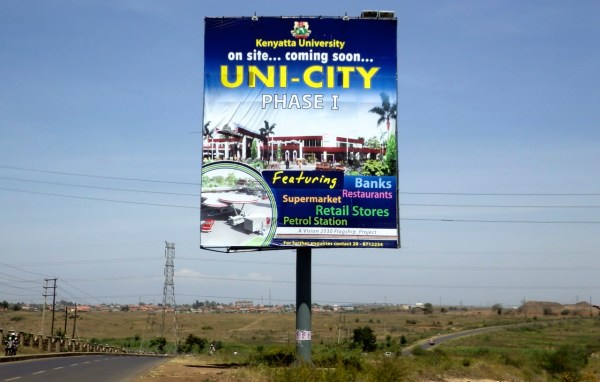
Kenyatta University now has c43,000 students, when we left in 1985 there were about 1500! It's changed remarkably in recent times as I saw when I went back to KU in January to discuss an exchange agreement. Some of the changes are related to Kenya's aggressive National Vision 2030 which is aims to take the... Continue Reading →
Open Access Teaching: the ‘Roddy’s Courses’ blog 12 months on ….
Now's a good time to cast a quick look back over the past twelve months as I've used the blog to teach my First Year courses in Sweden (2012 and 2013) and South Africa (2013). You can see from the statistics that there have been lots of visits (I'm sure some of them are return visits)... Continue Reading →
Africa not acirfA
There is something a little wrong on the splash page of the NUFFIC website …. Need a little more help?
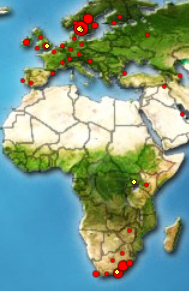
SANORD Member Universities 2013: Google Map
I am often asked: just what is this SANORD organisation, who is in it?Well the answer to the first question can be found in the new (and much improved) SANORD website.We currently have over 40 member Universities from the Nordic and SADC (Southern African Development Community) regions and to answer the second question I have... Continue Reading →
SANORD 2013 Malawi: Slideshow
I spent all of last week in Malawi attending the 2013 SANORD Symposium. The Southern African-Nordic Centre's 4th Biennial was excellently hosted by the University of Malawi at the newly built Bingu International Conference Centre in Lilongwe. Here's a slideshow. The pictures are taken in Lilongwe around the conference venue and on our lovely day... Continue Reading →
Indian or Asian Population map: Grahamstown 2011
This is the last of the four maps based on data in the 2011 Population Census and it plots the dispersal of Grahamstown's small number of Indians or Asians (total 484). The distribution of Grahamstown's Indian or Asian population shows a wide spread through the former white areas. Their group area was located two kilometres almost... Continue Reading →
White Population map: Grahamstown 2011
With 5657 people the white population was the third largest group in Grahamstown recorded in the 2011 Population Census. The map of their distribution shows that the centre of gravity (weighted mean centre) lies approximately one kilometre north west of the Cathedral. Most of the white population live in the northern suburbs and western side... Continue Reading →
Coloured Population map: Grahamstown 2011
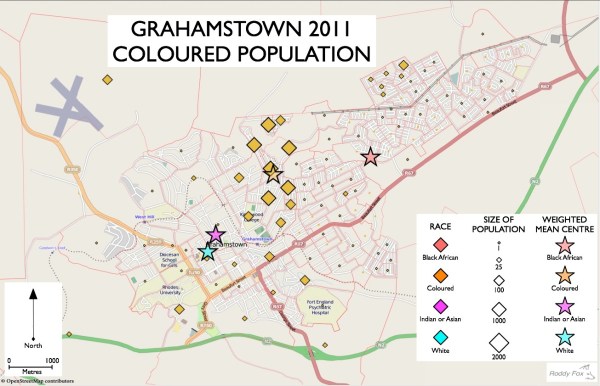
The distribution of the coloured population (total 7615) is the second map in this series showing Grahamstown's racial distributions in 2011. The main concentration is still immediately to the west of the townships, especially to the northern side of the urban area. This isn't surprising as the coloured group area was located there: north of... Continue Reading →
Black African Population map: Grahamstown 2011
This is the first of a number of posts mapping racial data and shows Grahamstown's Black African population using information extracted from the 2011 Census. The most detailed geographical statistics from the Population Census consist of information for very small areas (the so called small area layer). There are over 50,000 small areas in South... Continue Reading →
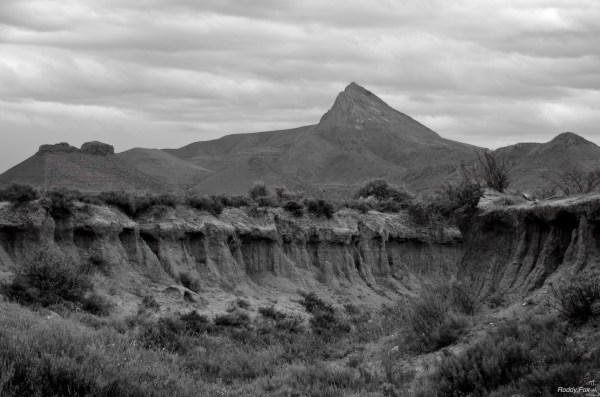
Extreme Weather Events in the Sneeuberg Mountains, Karoo – second seminar at Northampton University
Sabbatical leave: just what do you do? Why are you giving the same research seminar twice? Last weekend we were in Stockholm meeting up with Madeleine Castenvik-Holt and over drinks we found ourselves explaining what leave is for. Providing, we hope, answers to these two questions and then going on to enjoy a lovely meal at the... Continue Reading →